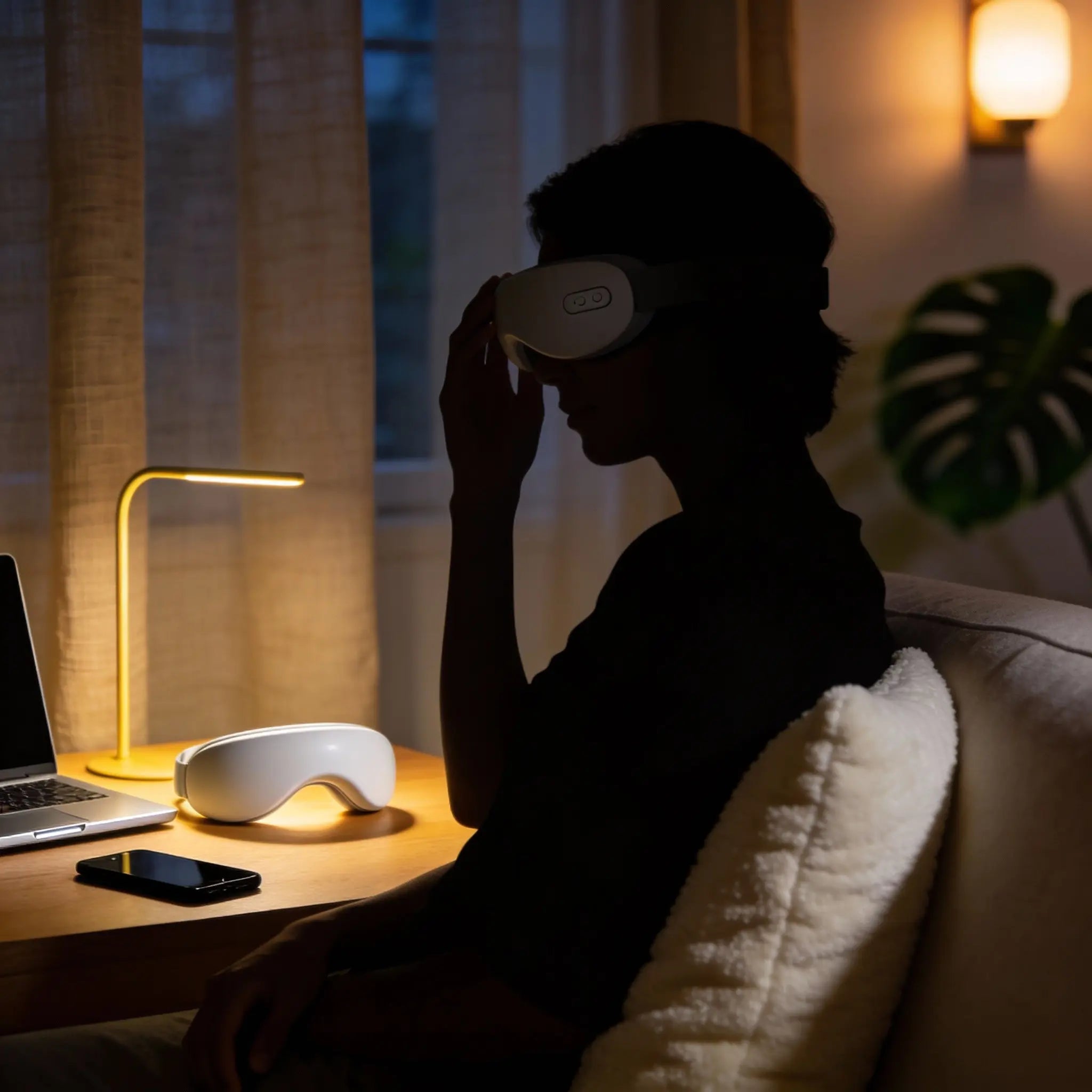
Are eye massagers useful?
In general, eye massagers are considered "relaxation and wellness" products. Their most common benefit is helping to relieve tension, fatigue, and stress around the eyes caused by excessive eye strain, rather than improving vision or treating eye diseases.
In terms of research, interventions involving thermal massage (heat + vibration) have shown improvements in dry eye symptom scores (e.g., OSDI) and some objective indicators (e.g., BUT, corneal staining), and adverse events in studies have mostly been mild and transient.
Can eye massagers improve eye fatigue?
If eye fatigue is primarily caused by staring at screens or mobile phones for long periods, leading to tight periocular muscles, tension between the eyebrows, or a heavy-headed feeling, rhythmic massage combined with heat therapy often provides more "immediate relief."
However, if the discomfort is caused by allergies, infections, significant inflammation, or other ophthalmic conditions, massagers usually only provide temporary comfort and may not address the root cause, which should be treated first.
Heated eye massagers vs. heat eye masks: What is the difference?
Simple warm compresses are themselves a common auxiliary strategy for dry eye/Meibomian Gland Dysfunction (MGD). Literature reviews indicate that repeated warm compresses can reduce dry eye symptoms and, in most studies, improve tear quality or Meibomian gland health.
A "heated eye massager" usually provides vibration/massage or more stable temperature output compared to an ordinary heated eye mask; RCTs have also compared heat massagers containing vibration/massage + heat therapy, finding them to be significantly more effective in improving symptoms than artificial tears alone.
Does it help with insomnia?
Using warm compresses or eye devices with heat therapy before bed may help with "relaxation" and comfort, but it serves as an aid to relaxation, and effects vary from person to person.
If insomnia occurs alongside severe dry eyes, pain, or other symptoms, it is recommended to first address the underlying eye problems and sleep hygiene (e.g., reducing screen use before bed), and then incorporate the massager for ritualized relaxation.
FAQ (Frequently Asked Questions)
Q1: Are eye massagers useful for dry and irritated eyes?
For some dry eye discomfort related to Meibomian gland function or caused by excessive eye strain, interventions like warm compresses/thermal massage have shown in studies to be able to improve symptoms and potentially improve indicators such as tear film stability.
Q2: How often should I use an eye massager?
Literature reviews mention that the common protocol for most studies involving microwave-heated or moist-heat eye masks is about 10 minutes per session, 1–2 times a day; in practice, you can start with a lower frequency based on your comfort level.
Q3: Who should not use an eye massager?
If you are currently experiencing acute eye inflammation/infection, are in a post-operative recovery period, or have a known eye disease and are unsure whether heat therapy/massage is suitable, you should consult an eye care professional first to avoid irritation or worsening of symptoms.