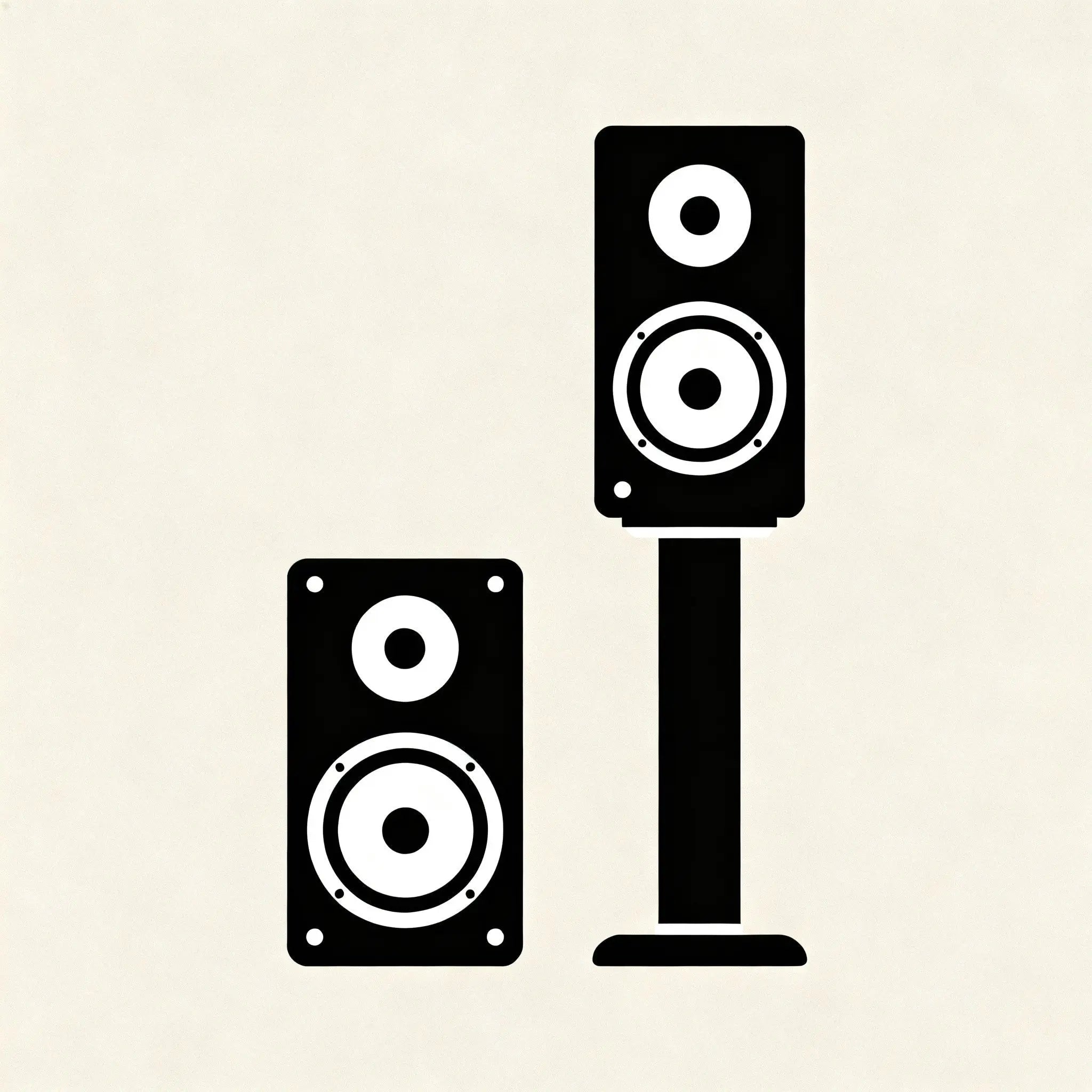
Choosing the right speakers is key to creating an ideal listening experience, and the choice between bookshelf speakers and floorstanding speakers is a challenge for many audiophiles. Bookshelf speakers are known for their compact size and balanced sound, making them suitable for homes with limited space; while floorstanding speakers are favored for their larger drivers and deeper low-frequency response. This article will provide a comprehensive analysis of the differences between bookshelf and floorstanding speakers, and, starting from your space requirements, guide you on how to choose the most suitable speaker type for your environment, helping you create your ideal audiovisual experience.
What is a bookshelf speaker? Basic characteristics and advantages/disadvantages explained.
Design concept and construction of bookshelf speakers
Bookshelf speakers are small, compact speaker systems that typically contain one or two speaker units, combining tweeters and mid-bass drivers. They are often designed to be placed on bookshelves, desks, or dedicated speaker stands, hence the name. The small cabinet size of bookshelf speakers makes them easy to place and suitable for narrow or multi-functional spaces.
Advantages and disadvantages of bookshelf speakers
- Advantages: Compact size, doesn't take up much space, flexible placement; delicate mid-to-high frequency resolution, suitable for listening to vocals and classical music; relatively affordable price, making it the first choice when budget is limited.
- Disadvantages: Limited low-frequency extension and lack of sufficient bass depth; weak sound pressure and soundstage performance in large spaces; requires a subwoofer to compensate for the lack of low frequencies.
Floorstanding Speakers: Size, Performance, and Space Requirements
Design advantages of floor speakers
Floorstanding speakers, also known as floorstanding enclosures, typically have a larger cabinet and multiple driver units (such as a three-way design, with separate units for tweeters, midranges, and woofers). The cabinet is placed directly on the floor, resulting in stronger low-frequency power and sound pressure level, and they are commonly found in medium to large-sized audio-visual spaces. Their larger size allows the woofer more room to perform, delivering a full and deep bass effect.
Suitable scenarios and limitations of floor speakers
- Suitable for: spacious living rooms, home theaters or audiovisual rooms; listeners who prefer strong dynamics and low-frequency response.
- Limitations: Large size, limited placement flexibility; may not match home décor style; high price, and requires significant amplifier thrust.
Sound performance: Key differences between bookshelf speakers and floorstanding speakers
Low-frequency performance comparison
Bookshelf speakers, due to the limited space of their cabinets and woofers, generally have a low-frequency response that is unlikely to exceed 65Hz, making them suitable for small to medium-sized spaces. They require a subwoofer to compensate for the lack of low frequencies. In contrast, floorstanding speakers have larger woofers and more cabinet space, resulting in deeper, more powerful, and wider-reaching bass, presenting richer bass details and dynamics.
Difference between soundstage and resolution
Bookshelf speakers, with fewer speaker units and a more rigid cabinet, often deliver better speed and detail, especially in vocals and string instruments, showcasing pure mid-to-high frequency resolution. Floorstanding speakers, with their multi-unit configuration and more complex crossover design, can provide a wider soundstage and a fuller, more three-dimensional sound, with distinct sound layers, making them more suitable for large or shared listening spaces.
Space matching: How to choose the right speaker type according to the environment
Recommended bookshelf speakers for small to medium-sized spaces
For spaces of 5-15 square meters, bookshelf speakers are often the best choice due to limitations in placement and indoor acoustics. Their compact size makes them easy to place at a suitable height and reduces the likelihood of standing waves and low-frequency booming. Paired with a suitable subwoofer, they can achieve a balanced and natural full-range sound.
Medium to large spaces tend to use floor-standing speakers
For living rooms or home theaters larger than 20 square meters, floorstanding speakers are more suitable. Their large enclosure and multi-channel configuration allow them to fully utilize low frequencies and soundstage power. In this case, the amplifier's power output needs to be relatively increased, and a larger placement space is required to achieve the best sound quality.
How to properly position bookshelf speakers and floor speakers? Practical placement tips.
Bookshelf speaker placement principles
- Keep a distance of 30-60 cm from the wall to avoid excessive low-frequency reflections.
- When placed near ear height, a speaker stand is often used.
- The two speakers form an isosceles triangle, with the listening position located at the center of symmetry.
- Avoid placing it in corners or on low-lying stacked objects.
Points to note when placing floor speakers
- The distance from the back wall should be at least 50 cm to prevent low-frequency resonance.
- Place the speakers evenly on both sides to avoid creating a sound field shift caused by one side being against a wall and the other side being empty.
- Vibration damping pads or foot pads can reduce vibration interference.
- Ensure the front space is clear to avoid furniture obstructing sound transmission.
Integrated Selection and Matching Suggestions: Creating the Best Bookshelf and Floor Standing Speaker Systems
The Importance of Pairing a Subwoofer and Amplifier
Whether choosing bookshelf speakers or floorstanding speakers, enhancing low-frequency performance is crucial. Bookshelf speakers often require a high-quality subwoofer to compensate for insufficient bass extension, while floorstanding speakers can be paired with other speakers depending on the space requirements. Amplifier power and impedance matching are equally important, helping speakers achieve optimal sound quality.
Adjust flexibly according to individual needs and budget
When budget is limited, bookshelf speakers paired with an entry-level amplifier are a cost-effective choice; with a larger budget, floorstanding speakers combined with a mid-to-high-end amplifier deliver a more immersive and full-bodied sound experience. At the same time, considering space size and audiovisual needs, a flexible approach is the smartest strategy.
Conclusion: Key Points in the Selection and Use of Bookshelf Speakers and Floor Standing Speakers
Understanding the design differences and sound performance of bookshelf speakers versus floorstanding speakers will help you make the most suitable choice based on your home space and budget. Bookshelf speakers, with their compact size and delicate sound, are suitable for users with limited space who value sound detail; floorstanding speakers, on the other hand, deliver powerful bass and a wide soundstage in larger spaces. Proper placement and pairing with an amplifier and subwoofer are also key to maximizing their effect. Want to learn more about selecting and setting up bookshelf speakers? Explore our product range and professional advice to take your home audio experience to the next level!